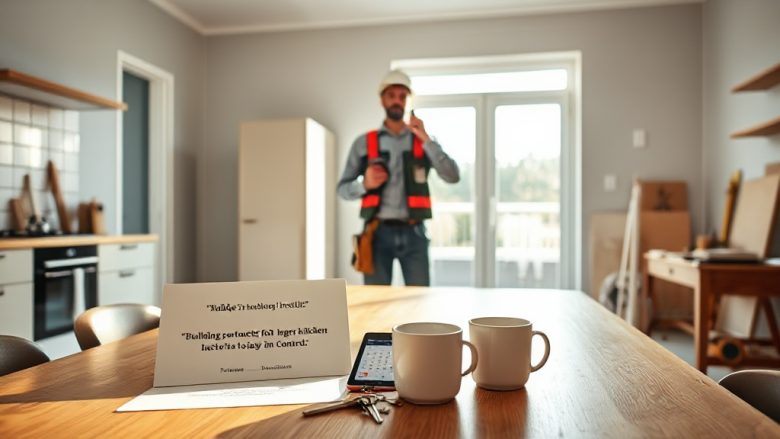
It’s 7:05am. I’m standing in a half-demolished kitchen with a coffee in one hand, watching the builder point at a wall he wants to remove. By 7:20 I’m in the car. At 12:40, between meetings, I notice a missed call and a voicemail about tile choices that apparently can’t wait until Saturday. I ring back at 6pm. No answer. That’s the reality of renovating when you have a full-time job and no intention of taking three weeks off to supervise. Building contractors for busy people aren’t a special species. They’re ordinary builders, plus a set of habits that stop the project from quietly drifting while you’re at your desk.
This is what I’ve learned doing exactly that: running a renovation from the edges of a working week.
The three time traps that catch busy homeowners
The first trap is the morning handover. Site starts at 7:30 or 8. You can be there for twenty minutes before work, which feels useful, and it is, but only if you use it properly. Most people spend it nodding at things they don’t understand and saying “sounds good” because they’re already thinking about the 9am call. That twenty minutes is the most valuable slot in your day. Treat it as a briefing, not a chat.
The second trap is the unanswered midday question. Builders work through the day. They hit a decision point at 11am and want an answer at 11:05. If you’re in back-to-back meetings, that question becomes a guess, and the guess becomes a wall in the wrong place. One tiler I worked with tiled an entire splashback in a shade I’d have rejected, simply because nobody replied to his text. He wasn’t being difficult. He was being efficient with his own time.
The third trap is the weekend catch-up. You sit down on Saturday morning to review the week, and discover three things have already been done that you’d have changed. By then, undoing them costs money and goodwill. The busy homeowner’s renovation doesn’t usually fail in a dramatic way. It drifts, one unreturned message at a time.
How to set up updates that actually reach you
Forget the group chat that nobody reads. What works is a single, predictable channel with a clear rhythm. I ask for one written update at the end of each working day, by text or email, listing what was done, what’s next, and anything waiting on me. Six lines is plenty. It takes the builder two minutes and it means I never arrive on site blind.
Then I add one live conversation a week, usually a Friday call at a fixed time. Not a site meeting, just a phone call. Fifteen minutes. That’s where the real questions surface, because people say things on a call they won’t type out.
For anything urgent during the day, agree a code. I use the word “urgent” at the start of a message, and only for things that genuinely stop work. My builder knows that if he sends it, I’ll reply within the hour even if I’m in a meeting. If he doesn’t use it, I’ll get to it that evening. This one rule removed almost all of the friction from my last project. He stopped guessing whether I cared, and I stopped feeling ambushed at lunchtime.
Photographs matter more than you’d think. A daily photo of the day’s progress takes seconds and tells you more than a paragraph. If something looks wrong, you can ask about it early, while it’s still cheap to change.
What to decide early so you’re not the bottleneck
Nearly every delay I’ve caused has been a decision I hadn’t made. Not a difficult decision, just one I assumed could wait. It couldn’t, because the builder needed it before he could order materials or book a trade.
Before work starts, get the fixed items locked down: kitchen layout, tile and flooring choices, paint colours, door and handle styles, bathroom fittings, and where the sockets and lights go. These aren’t glamorous decisions, but they’re the ones that hold up the schedule. If you can’t decide between two tiles, buy a sample of each and decide within a week. Indecision is more expensive than picking the slightly worse option.
Give your builder a written list of your decisions, dated, so there’s no argument later about what was agreed. Keep it somewhere you can both see it. I use a shared document with a simple table: item, choice, date confirmed. It’s boring and it saves arguments.
Also decide your tolerance for changes. If you’re the kind of person who walks past a finished wall and suddenly wants a niche, say so upfront and agree how variations get priced. Most builders are fine with changes. They’re not fine with changes that arrive after the plaster’s dry and nobody’s discussed the cost.
How to spot trouble remotely before it gets expensive
You don’t need to be on site to notice a problem. You need to be paying attention to a few signals.
Watch the pattern of updates. If the daily message stops, or becomes vague, something’s wrong. Builders go quiet when they’re behind, waiting on a trade, or hoping a mistake will sort itself out. A gap of two days is worth a call.
Listen for repeated phrases. “We’ll sort that later” is fine once. Said three times about the same thing, it means it isn’t being tracked. “It’ll be fine” about anything structural, electrical or waterproofing-related deserves a proper answer, not reassurance.
Check the money rhythm. If the payment schedule was agreed and suddenly you’re being asked for an early instalment with a vague reason, slow down and ask what it’s for. That’s not an accusation. It’s just a question that keeps things clear.
Look at the photos properly. Are the same tools in the same place two days running? Is the skip still full? Small clues tell you whether the project is moving. And if you can, drop by unannounced once a week at the end of the day. Not to inspect, just to be a presence. Builders work differently when they know the client might appear.
Red flags worth acting on quickly: a builder who won’t put anything in writing, one who asks for large cash payments with no receipt, one who dismisses your questions as fussing, and one whose answers change depending on who’s asking. Any of those, and it’s worth pausing the project to sort it out. A week of delay now is cheaper than three months of argument later.
Protecting your evenings and your sanity
The goal isn’t to run the site. It’s to run the decisions, and to do it inside working hours as much as possible. Set a hard stop: after 7pm, no project admin. If something genuinely urgent comes in, the urgent code handles it. Everything else can wait until the morning handover.
Keep one evening a week completely free of the renovation. No quotes, no tile browsing, no scrolling through inspiration photos. You’ll make better decisions on Monday if you’ve had a proper break, and you’ll be less likely to snap at your builder over something small.
Accept that you can’t control everything, and that a good builder will make dozens of sensible small calls without asking you. That’s what you’re paying for. Your job is the handful of decisions that actually matter, made early, written down, and communicated through one channel. Do that, and you can renovate a house while holding down a job, without the project swallowing your weekends or your temper. The missed call at lunch will still happen. It just won’t matter as much.