How to Get a Blocked Drain Fixed in Itaim Bibi: Steps from First Call to Working Result
Most guides about drain emergencies start with the blockage itself. That is the wrong starting point. The one thing they leave out is the decision you make in the first sixty seconds: whether you are dealing with a simple local clog or a sign of a deeper network problem that will come back tomorrow if you only treat the surface. This article teaches you that decision first, then walks you through every action from the initial call to a drain that actually stays clear. If you are searching for a desentupidora Itaim Bibi, the sequence below is the practical path a trained technician follows, translated into steps a beginner can manage.
Step 1: Read the Symptoms Before You Call Anyone
Before you pick up the phone, spend two minutes observing. The pattern of symptoms tells the technician what equipment to bring and tells you whether the problem is urgent or can wait for a scheduled visit. A single slow sink is a local issue. Water backing up in a floor drain when you use the washing machine is a shared-line issue. Sewage smell in more than one room usually points to a venting or main-line problem.
Quick symptom checklist
- One fixture only: likely a trap or branch-line clog near that fixture.
- Multiple fixtures on the same floor: the branch line or stack is partially blocked.
- Ground-floor drains backing up when upper floors use water: the main building line is obstructed.
- Gurgling sounds and slow drainage everywhere: venting issue or a nearly full main line.
- Foul odor without visible backup: trapped waste or a dry trap in an unused drain.
Write down which fixtures are affected and when the problem appears. This sounds trivial, but it is the difference between a technician arriving prepared and a second visit being needed. A professional company such as Desentupidora Suprema uses this information to choose between a manual snake, a hydrojetting unit, or a camera inspection before the truck leaves.
Step 2: Make the First Call with the Right Information
The first call is not just a booking. It is a technical handover. The person on the other end needs three things: the address, the symptom pattern you just wrote down, and whether the property is residential, commercial, or a condominium. Each of those changes the tools and the access arrangements.
What to say in the first minute
- State the full address and the nearest cross street. In Itaim Bibi, building access rules vary street by street, and the technician needs to plan parking.
- Describe the symptoms in the order they appeared, not just the final state.
- Say whether the property is a house, an apartment, a restaurant, or a managed building. Commercial kitchens and condominium stacks require different procedures.
- Ask whether the visit is an emergency call or a scheduled service, and confirm the expected arrival window.
- Ask what payment methods are accepted and whether the price includes the inspection.
If you are a tenant, tell the dispatcher so they can coordinate with the building manager. If you are a condominium manager, mention the number of units affected; that single detail often determines whether a hydrojetting truck is dispatched instead of a standard service van. For a desentupidora Itaim Bibi São Paulo SP service, giving this information up front reduces the chance of a return visit and keeps the cost predictable.
Step 3: Prepare Access and Protect the Area
While you wait, prepare the property. Most delays on emergency calls are not caused by the blockage; they are caused by locked garages, blocked inspection covers, and pets that need to be secured. Ten minutes of preparation saves thirty minutes of waiting.
Preparation tasks
- Clear the path from the street entrance to the affected drain, including any garage or service corridor.
- Locate the inspection cover (the round or square lid) and make sure it is not covered by furniture, planters, or stored boxes.
- Move rugs, mats, and anything absorbent away from the drain area.
- Secure pets and children in a separate room.
- Have a bucket and old towels ready, and if possible, a floor squeegee.
- Confirm the building’s water shut-off location in case the technician needs it.
Do not pour chemical drain cleaners into the line before the technician arrives. This is the most common beginner mistake. Chemicals can damage older pipes, and they create a safety hazard for the person who opens the inspection cover. They also mask the symptom, making diagnosis harder. If you have already used a product, tell the technician so they can take precautions.
Step 4: Understand What the Technician Does and Why
When the technician arrives, the work follows a diagnostic sequence. Understanding it helps you ask the right questions and avoid being sold a service you do not need. The sequence is: inspect, isolate, clear, verify, and advise.
Inspection and isolation
The technician opens the inspection cover and checks the water level and flow direction. If the line is full, they may need to isolate the affected branch so that clearing one section does not push waste into another. In buildings, this is where the condominium manager’s input matters: isolating a stack affects several units, so the timing must be coordinated.
Clearing methods
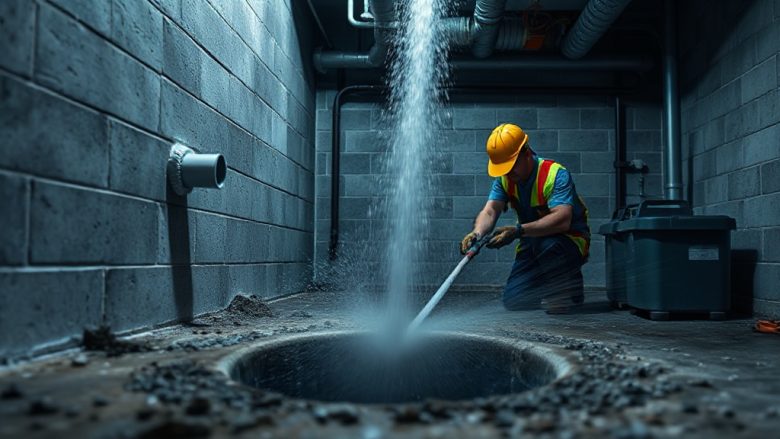
There are three main methods, and each has a correct use case. A manual or electric snake is used for branch lines and short runs. Hydrojetting uses high-pressure water to scour the pipe walls and is the standard method for grease, scale, and root intrusion in main lines. A camera inspection is used after clearing to confirm the pipe is genuinely open and to identify cracks or collapses that would cause a repeat blockage.
| Method | Best for | Typical use |
|---|---|---|
| Manual or electric snake | Local clogs in branch lines | Sinks, showers, short runs |
| Hydrojetting | Grease, scale, roots, sediment | Main lines, commercial kitchens, condominium stacks |
| Camera inspection | Verification and diagnosis | After clearing, before signing off |
Verification and advice
After clearing, the technician runs water through the line and watches the flow at the inspection cover. A proper job ends with a verification step, not just with the drain appearing to drain. Ask for the technician’s observation: was the blockage caused by grease, roots, a foreign object, or a pipe defect? That answer determines whether you need preventive maintenance.
For a desentupidora em Itaim Bibi São Paulo SP, the practical advantage of a company that handles both residential and commercial work is that the same team can move from a single apartment sink to a restaurant grease line without changing contractors. That continuity matters when the cause of the blockage is a shared line.
Step 5: Confirm the Result and Set Up Prevention
The job is not finished when the water goes down. It is finished when you have confirmed three things: the drain flows normally under load, there is no leak at the inspection cover, and you know what caused the blockage. Ask the technician to run a full flow test, not just a trickle. In a kitchen, run the dishwasher and the sink together. In a bathroom, run the shower and flush the toilet at the same time.
Prevention by property type
- Apartments: use drain strainers in showers and sinks, and never flush wipes or hygiene products.
- Houses: schedule an annual inspection of the main line, especially if there are mature trees near the pipe run.
- Restaurants and commercial kitchens: maintain grease traps on a fixed schedule and arrange periodic hydrojetting of the kitchen line.
- Condominiums: keep a maintenance log of every blockage, including the date, the affected stack, and the method used. Patterns in that log reveal a failing line before it becomes an emergency.
Ask for a written summary of the service, including the method used and any recommendation. If the technician found a pipe defect, get that in writing too, because it is the basis for a repair decision later. A blockage that returns within a few weeks is almost always a sign that the underlying cause was not addressed, and the written record is what allows you to hold the contractor accountable.
Closing Checklist and Frequently Asked Questions
Use this checklist before you consider the job closed. It is the same list a trainer would hand to a beginner on their first supervised call.
- Symptoms recorded before the call, including which fixtures were affected.
- Address, property type, and access arrangements confirmed with the dispatcher.
- Inspection cover accessible and area protected.
- No chemical cleaners poured into the line before the visit.
- Method explained by the technician and matched to the cause.
- Full flow test completed under load.
- No leak at the inspection cover after clearing.
- Written summary received, including cause and any recommendation.
- Prevention schedule set for the property type.
How quickly should I expect a technician to arrive in an emergency?
Arrival time depends on traffic and the time of day, but a 24-hour emergency service should give you an estimated window at the moment of the call. Ask for that window and ask what happens if the technician is delayed. A company that cannot give a window is a company you should not rely on for an emergency.
Can I clear a blocked drain myself before calling a professional?
You can remove a visible hair clog from a shower strainer or plunge a single sink. You should not use chemical cleaners on older pipes, and you should not open an inspection cover if the line is full, because the contents are a health hazard. If the blockage affects more than one fixture, stop and call a professional.
Why does the same drain keep blocking?
A recurring blockage usually means the cause was never removed: grease buildup on the pipe walls, root intrusion at a joint, or a sagging section of pipe that traps sediment. Clearing the opening restores flow temporarily; hydrojetting and a camera inspection address the actual cause. If a contractor only snakes the line and leaves without verification, expect the problem to return.
What should a condominium manager prepare before the visit?
Prepare the maintenance log, identify which units are affected, confirm access to the inspection covers, and notify residents about any water isolation. A manager who provides this information before the technician arrives shortens the job and reduces the risk of a second visit.
The outcome you want is not a drain that drains today. It is a drain that stays clear, a written record of what happened, and a prevention plan matched to your property. Follow the steps in order, ask the verification questions, and keep the checklist. That is how a beginner gets a working result on the first call.